I was recently asked what practices and ideas are central to my practice. To explain, I must start with the concept of Yin and Yang. Let’s begin with a quote from my grandfather, Sung Liao, from a book he co-authored called Principles and Practice of Contemporary Acupuncture:
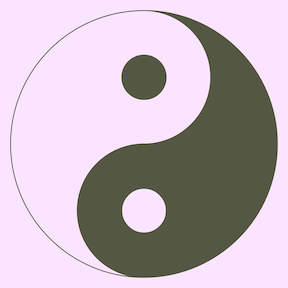
[The symbol of Yin/Yang] was said to be finalized by Chen Xiyi, a renowned Taoist scholar and occultist of Song Dynasty (960-1126 A.D.). The circle represents the Cosmos in perpetual motion and endless circulation. It is divided into two equal tadpole-shaped halves, depicting Yin and Yang as two opposing forces in equal portions. These two tadpole-shaped halves dove-tail into each other, symbolizing the concept that they are not absolute but relative… The tadpole-shapes of Yin and Yang also indicate that when Yin approaches its maximum, Yang its minimum, and vice versa…That is, they co-exist in equilibrium. They are also in a harmonious co-existence, complementing and supplementing each other. This equilibrium is of great importance in the interpretation of events in the nature and in the humans… When Yin and Yang are in balance, the Universe, the nation, and the human being are in harmony. Otherwise, they would be in turmoil. In the case of human beings, sickness is the result. Chinese traditional medicine strives to reverse the imbalance, to preserve that delicate equilibrium, and to achieve normalcy.”
In Traditional Chinese Medicine (TCM) we use Yin to categorize what is dark, material, cold, and Yang to categorize what is bright, moving, hot. Yin is Blood and Yang is Qi 氣 (Vital Energy), meaning Blood is the substance that relies on Qi to move it, without movement of blood there is no life. Another way to understand these vital, fundamental opposites in the body could be the Sympathetic and Parasympathetic nervous system. Sympathetic is Yang: it agitates the body, elevates the heart rate, raises blood pressure, etc, to allow the body to exert and respond to a stressful circumstance. Parasympathetic is Yin: it relaxes the body by slowing down these distressed body functions. These two opposing forces are part of the same system – without both our bodies would not be able to function.
Yin and Yang in Context
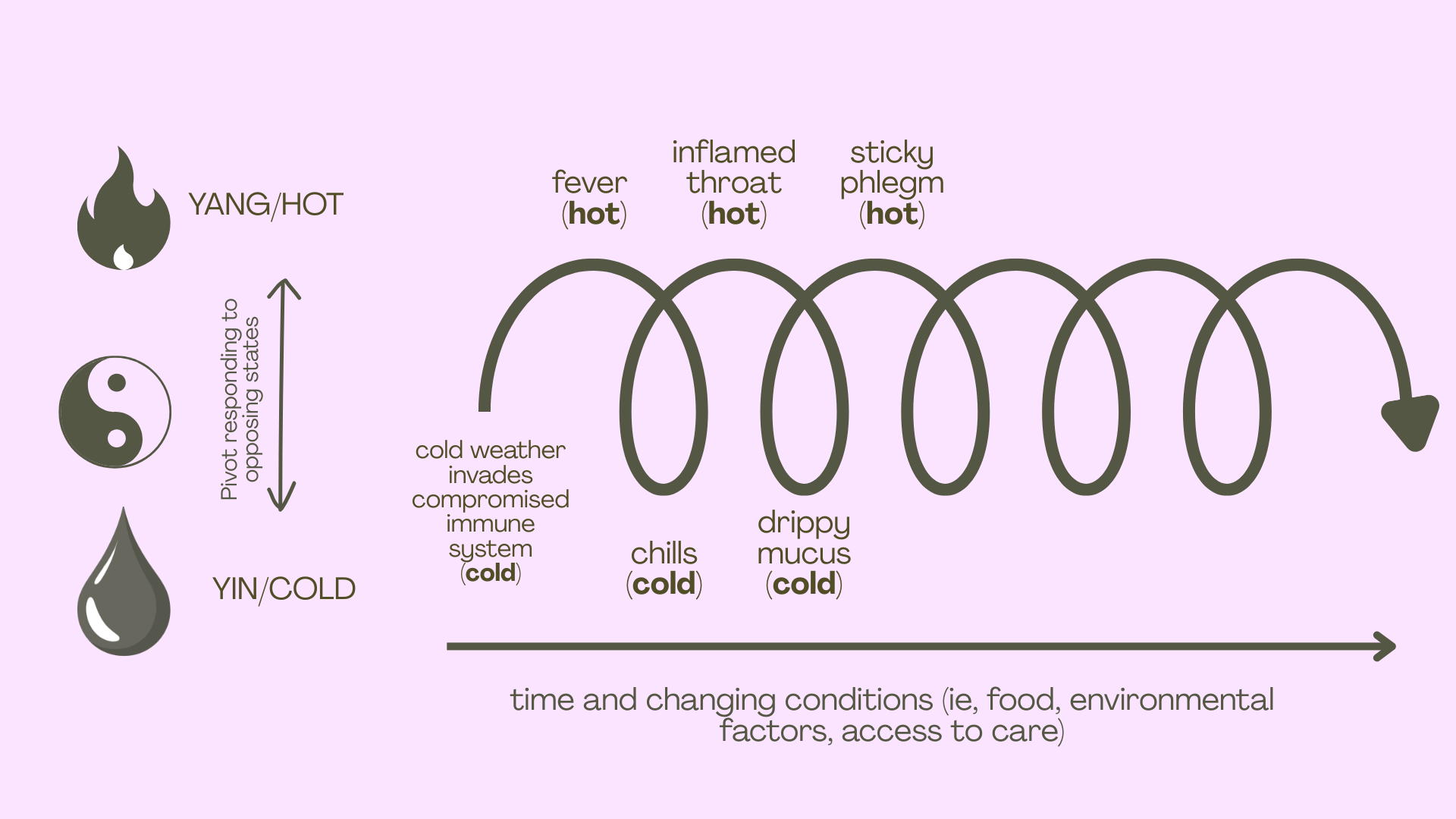
This concept of opposing, transformational forces must be also understood in real life, along the passing of time and affected by material conditions. For example, in the Northeast region of the United States, in which I am situated, we cycle from Yin to Yang, winter to summer, from cold weather to hot and back again. But the experience of winter is different each time because of the changing conditions. Summer 2026 becomes hotter than Summer 2025, 2024, etc because of capitalist-imposed climate catastrophe, and thus subsequent winters become colder to respond to the warming conditions. In TCM we can see this pattern demonstrated by the common cold. As the body encounters the pathogen (or Invasion of Wind-Cold in TCM), it will respond with heat to try to burn off the pathogen, resulting in a fever. To try to maintain equilibrium, the body will then cool itself down with chills, and so on. Exactly how the body responds through this process of course is shaped by the passing of time and the material conditions that the body is within; in other words, if the pathogen is able to be pushed out and healed, or progresses deeper and deeper into the body resulting in chronic or severe illness will depend on the person’s own constitution as well as access to care, food, and a healing environment. (This process is conceptually very similar to Marx’s Dialectical Materialism, but that is for another time.)
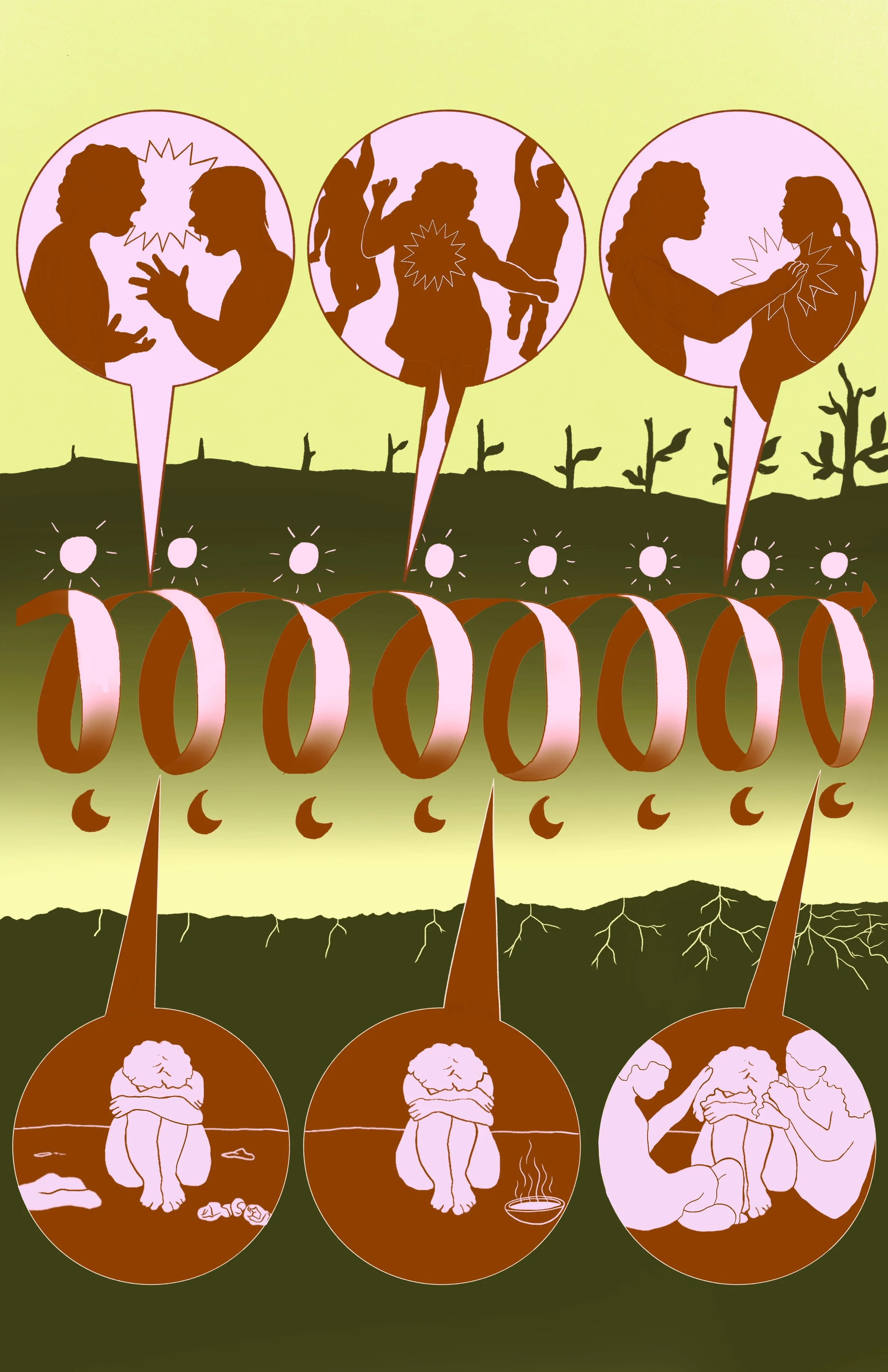
We can apply this same theory to, say, bouts of depression. A person may experience Yin periods of depression flare-ups, resulting in low activity, lethargy, withdrawal, and sadness, followed by more Yang periods of energy, relative joy, and movement, which may in turn trigger more feelings of sadness. As they return to another Yin depression phase, they may feel disappointed that they are regressing, or back to square one. However, they must remember that the current depression phase is inherently different from the prior one, as it contains and is shaped by that Yang phase of lightness that came between them. Perhaps the person is able to approach it differently, this time they are able to implement small changes during this Yin time. Maybe they have more support this time, enlist the help of medication or therapy. Perhaps it is the withdrawal and rest that enables the time, space, and reflection necessary to forge new connections during the next Yang phase.
Many Minds, Same Concepts
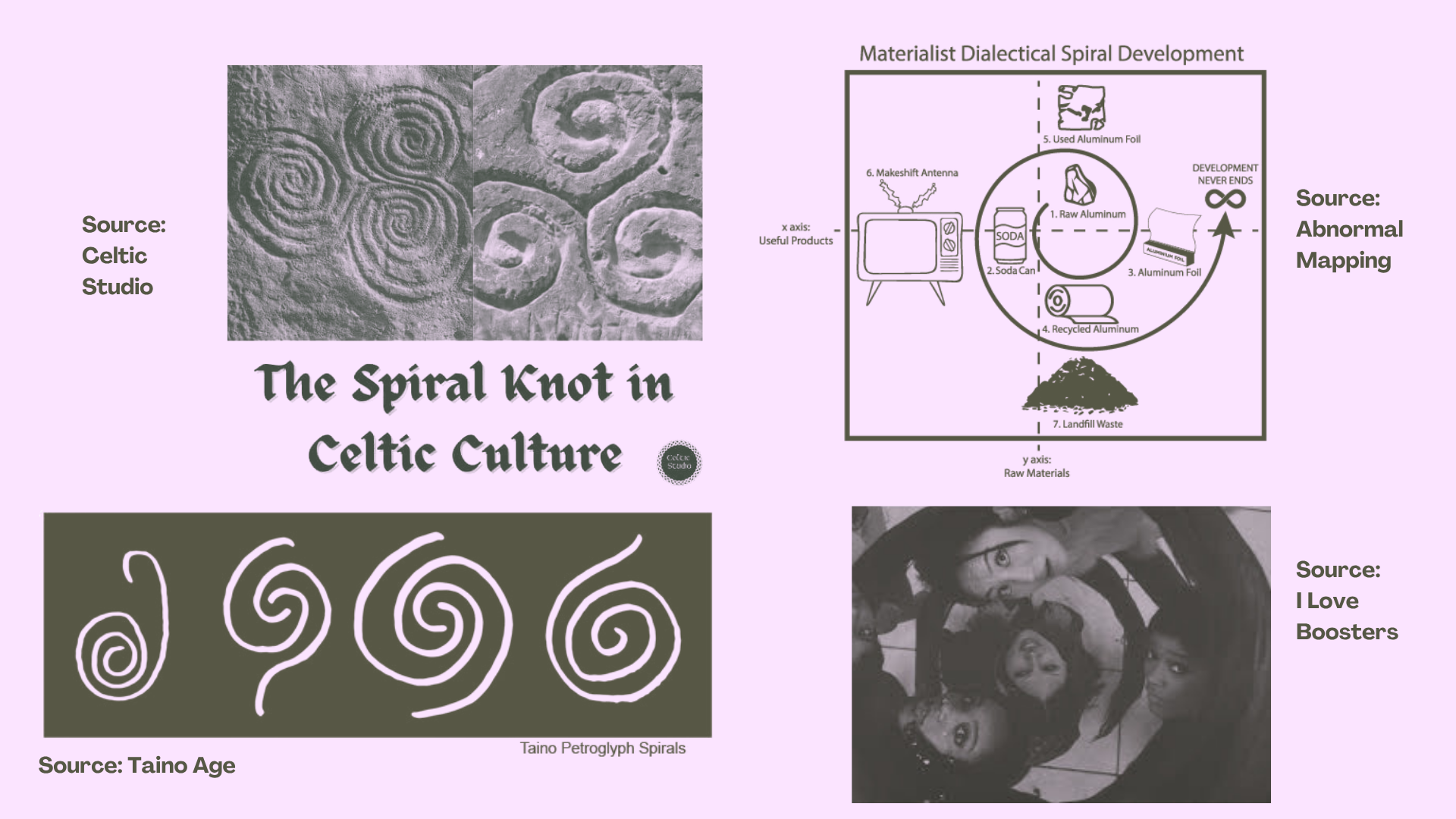
Though Yin and Yang is a basis for Taoist beliefs and culture, many cultures and contexts have arrived at similar ways of understanding the cyclical, spiraling nature of healing and time. Our hyper-productive capitalist system benefits from us being disconnected from the ebbing and flowing order of things and a connection to our own natural rhythms. Let us create a world that allows us to revisit old wounds and learn from them, that uses opposition as growth, that respects the healing process 𖦹 𖦹 𖦹